Lincolnshire Dry Lining Cost and Service Guide (2026)
If you are budgeting for dry lining, plastering, partitioning or ceiling work in Lincoln or across Lincolnshire, the first thing to understand is that costs move with scope, not guesswork. Board type, finish level, access, and whether the job is a single room or a full commercial fit-out all change the figure.
This guide sets out typical market ranges we see across the East Midlands, what drives pricing up or down, and how to compare quotes properly. It is based on live trade data, regional cost indices, and quotes from verified UK contractors in 2026. Every project is different, so treat these as planning benchmarks, not fixed prices.
TL;DR
- Lincolnshire sits roughly 10% below the UK national average for plastering and dry lining labour.
- Standard dry lining: £16 to £37 per m², depending on method and finish.
- Metal stud partitioning: £40 to £65 per m² installed.
- Suspended ceilings: £40 to £70 per m² for flat designs; bespoke stepped or coffered work runs £70 to £120 per m².
- Rendering: £45 to £120 per m² depending on system (sand/cement through to silicone).
- Floor screeding: £30 to £50 per m² for typical residential work.
- The best way to control cost is to define the scope clearly before quoting and compare like for like on materials, finish, and what is included.
Regional Context: Lincoln and Lincolnshire
Lincoln is a medium-sized city of around 105,000, with a mix of Victorian terraces, inter-war semis, and modern new-build estates across LN1, LN2, LN5 and surrounding villages. For building trades, the East Midlands typically runs a touch below the UK average. Nottingham, Derby, and Leicester sit at the higher end; Lincoln and the smaller Lincolnshire towns are noticeably cheaper for labour.
That matters because a plastering or dry lining job in Lincoln will often quote 5% to 15% lower than the same scope in London or the South East. Materials (board, metal, insulation) are fairly uniform nationwide, but labour day rates in Lincolnshire tend to sit in the £150 to £220 range versus £250 to £350+ in the capital.
Dry Lining Costs
Dry lining is the fastest way to line internal walls and ceilings without waiting for wet plaster to dry. It is used in new builds, renovations, loft conversions, and commercial fit-outs across Lincolnshire.
Cost per Square Metre
| Type of Work | Typical Cost per m² (Materials + Labour) |
|---|---|
| Standard plasterboard walls (tape and joint finish) | £16 to £28 |
| Dry lining / dot and dab to blockwork | £15 to £25 |
| Plasterboard ceilings (standard) | £22 to £37 |
| Moisture-resistant or fire-rated board upgrade | Add £3 to £6 per m² |
| Full skim coat over plasterboard | Add £4 to £8 per m² |
| Insulated plasterboard (thermal upgrade) | £25 to £40 per m² |
| Acoustic dry lining (soundproofing) | £30 to £50 per m² |
Typical Room and Project Costs
| Project | Typical Total Cost | Typical Duration |
|---|---|---|
| Small bedroom dry lined | £500 to £800 | 1 day |
| Average double bedroom | £540 to £950 | 1 to 2 days |
| Living room (walls + ceiling) | £800 to £1,400 | 1 to 2 days |
| Small flat (full dry line) | £1,400 to £2,300 | 2 to 3 days |
| Average 3-bed house (full dry line) | £3,000 to £5,500 | 3 to 5 days |
| Whole house dry lining | £3,500 to £6,500 | 4 to 7 days |
What Moves the Price
- Board type: Standard gypsum board is cheapest. Moisture-resistant (green), fire-rated (pink), acoustic, or thermal boards add cost but are required for Building Regulations in kitchens, bathrooms, party walls, and escape routes.
- Finish level: Tape and joint is the standard, paint-ready finish. A full skim coat gives a smoother, more traditional plaster look but adds labour time and cost.
- Access and site conditions: Furnished rooms, restricted parking, high ceilings over 2.4 m, or tight staircases all add time. A top-floor flat with no lift can push labour up by £100 to £250.
- Prep work: Stripping old plaster, repairing framing, adding insulation behind boards, or fire-stopping around services will increase the scope.
Plastering Costs
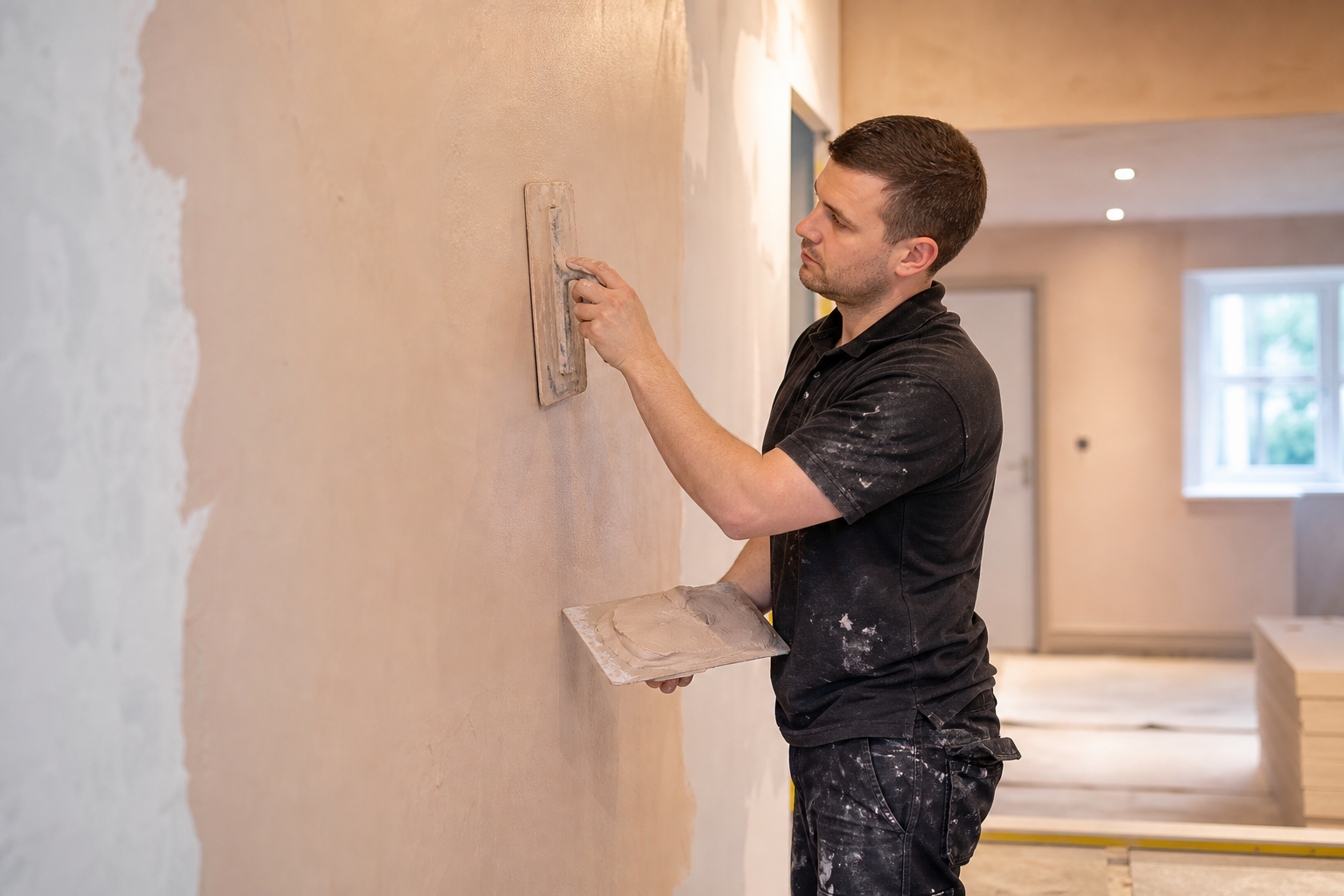
Plastering gives a solid, smooth finish directly onto blockwork, brick, or over existing plaster. It is still the preferred method in older Lincolnshire properties where breathability matters.
Cost per Square Metre
| Type of Work | Typical Cost per m² |
|---|---|
| Skim coat over sound plaster | £15 to £22 |
| Full re-plaster (two-coat) | £25 to £40 |
| Plastering ceilings | £22 to £35 |
| Artex removal and re-skim | £28 to £45 |
| External rendering (see Rendering section) | £45 to £120 |
Typical Room Costs in Lincoln
| Project | Typical Cost | Duration |
|---|---|---|
| Small bedroom skim | £360 to £500 | 1 day |
| Standard room re-plaster (walls + ceiling) | £495 to £720 | 1 to 2 days |
| Complex: hack off, damp repair, re-plaster | £720 to £1,200 | 2 to 3 days |
Rendering Costs
External rendering protects brickwork, improves weather resistance, and can include insulation for thermal performance. On Lincolnshire properties, especially older solid-wall homes, the right render system matters.
Cost per Square Metre by System
| Render Type | Cost per m² | Typical Lifespan | Maintenance |
|---|---|---|---|
| Sand and cement | £45 to £70 | 15 to 25 years | High (regular painting) |
| Acrylic render | £60 to £90 | 20 to 30 years | Medium |
| Monocouche (through-colour) | £70 to £100 | 20 to 30 years | Low |
| Silicone render | £80 to £120 | 25 to 40 years | Very low (self-cleaning) |
| External Wall Insulation + Render | £100 to £180 | 30+ years | Very low |
Typical Full Project Costs
| Property | Typical Range |
|---|---|
| Small bungalow (60 m²) | £3,500 to £6,000 |
| 3-bed semi (90 to 120 m²) | £7,000 to £14,000 |
| Large detached (150 m²+) | £12,000 to £20,000 |
Additional Costs
- Scaffolding: £1,000 to £2,500 for a semi-detached house.
- Render removal: £1,500 to £4,000 if old render is blown or damaged.
- Repairs and prep: £300 to £1,500 for crack stitching, stabilisation, or damp treatment.
Metal Stud Partitioning Costs
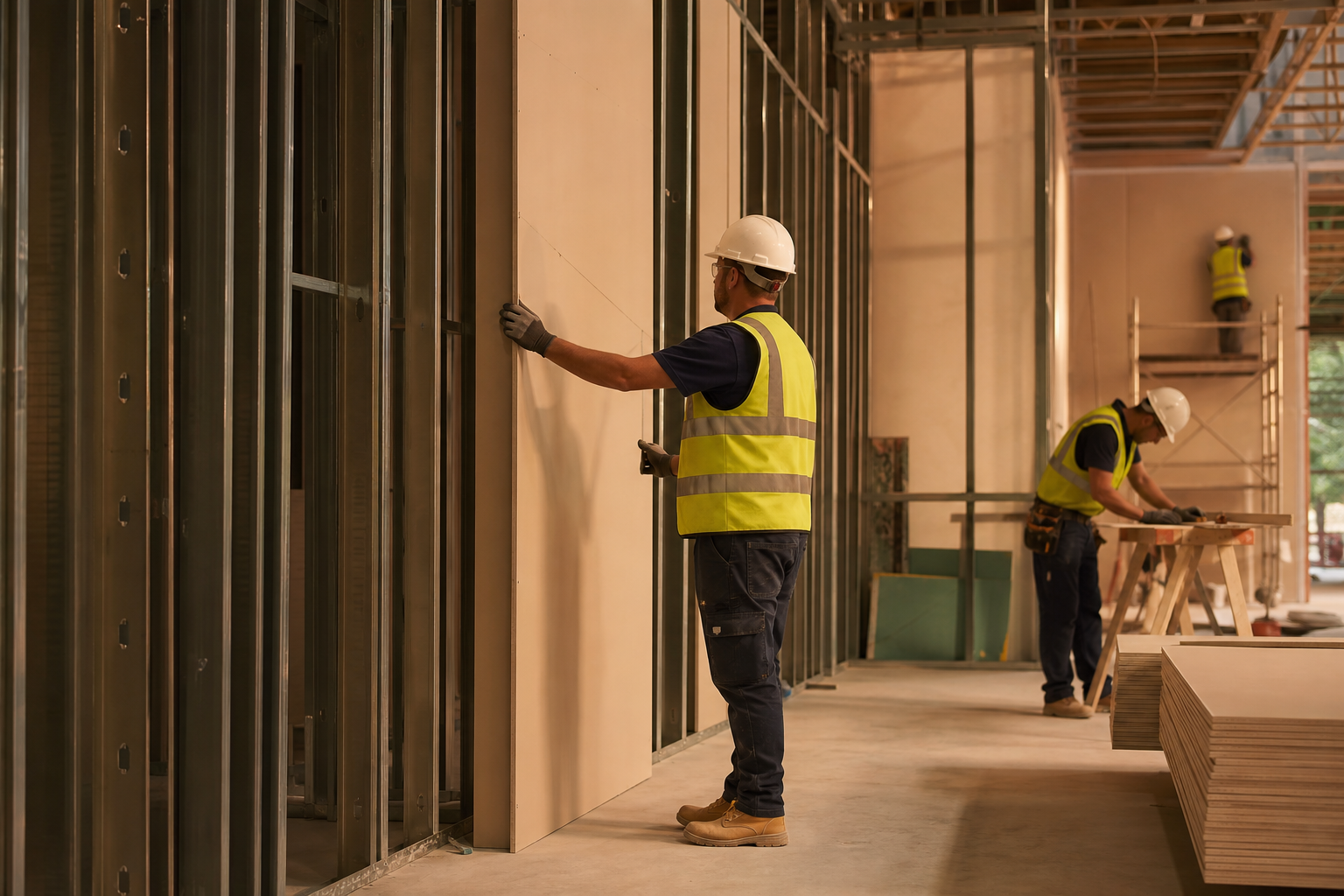
Metal stud partitions are the standard for creating new rooms, offices, corridors, and WC areas in commercial and residential refurbishments. They are non-load-bearing, quick to install, and easy to run services through.
Cost per Square Metre
| Specification | Cost per m² (Installed) |
|---|---|
| Single-layer standard partition (both sides) | £40 to £55 |
| Double-layer (improved sound/fire) | £55 to £75 |
| Acoustic partition (mineral wool + acoustic board) | £65 to £90 |
| Fire-rated partition (30 to 60 minutes) | £70 to £100 |
| Glazed section within metal stud frame | £120 to £200 per linear metre |
Factors Affecting Price
- Height: Partitions over 3 m need additional stud reinforcement or head restraints.
- Services: Cutting in for electrics, data, or plumbing adds labour.
- Doors and openings: Each door frame or glazing panel is priced separately.
- Sound and fire rating: Upgrading from standard to acoustic or fire-rated board and infill adds 30% to 50%.
Suspended and MF Ceiling Costs
Suspended ceilings hide services, improve acoustics, and create a clean, modern finish. MF (metal framework) ceilings are the plasterboard alternative, used where a seamless, painted finish is preferred over ceiling tiles.
Suspended Ceilings (Plasterboard)
| Design | Cost per m² |
|---|---|
| Flat plasterboard ceiling | £40 to £65 |
| Single stepped / box ceiling | £55 to £85 |
| Double stepped / coffered | £70 to £105 |
| Curved or organic form | £90 to £130 |
| LED lighting channel (additional) | £15 to £40 per linear metre |
MF Ceilings (Metal Framework + Plasterboard)
| Specification | Cost per m² |
|---|---|
| Basic MF system (metal + standard board) | £18 to £30 |
| MF with acoustic insulation | £30 to £50 |
| MF with fire-rated board (30 to 60 min) | £35 to £55 |
| MF with thermal insulation above | £35 to £60 |
Notes
- MF ceilings reduce room height by 10 to 15 cm typically.
- Suspended ceilings with bulkheads or lighting troughs can require 20 to 30 cm.
- In rooms below 2.4 m ceiling height, consider whether the drop is acceptable.
Insulation Costs
Insulation is often installed behind dry lining, within partitions, or above MF ceilings to meet Part L of Building Regulations or improve comfort.
| Application | Typical Cost |
|---|---|
| PIR-backed insulated plasterboard | £20 to £28 per m² |
| Mineral wool between studs | £4 to £8 per m² |
| Acoustic partition roll (APR) | £6 to £12 per m² |
| Floor insulation (under screed) | £8 to £15 per m² |
| Cavity wall insulation | £15 to £25 per m² |
Tape and Jointing Costs
Tape and jointing is the standard finish for plasterboard seams and corners. It is faster and cleaner than a full skim coat and gives a paint-ready surface.
| Scope | Cost |
|---|---|
| Tape and joint standard walls | £4 to £7 per m² |
| Tape and joint ceilings | £5 to £9 per m² |
| Full skim over tape and joint (premium finish) | Add £8 to £14 per m² |
Dot and Dab Costs
Dot and dab fixes plasterboard directly to masonry walls using adhesive dabs. It is quicker than framing and works well where walls are reasonably flat.
| Scope | Cost per m² |
|---|---|
| Dot and dab (standard board) | £15 to £25 |
| Dot and dab (insulated board) | £22 to £35 |
| Dot and dab + skim coat | £28 to £45 |
Fire Stopping Costs
Fire stopping seals penetrations through fire-rated walls and floors to prevent smoke and flame spread. It is a Building Regulation requirement (Part B) in commercial buildings, multi-occupancy residential, and anywhere fire compartments exist.
| Application | Typical Cost |
|---|---|
| Pipe and cable penetration seals | £15 to £40 per penetration |
| Fire batt and compound around services | £25 to £60 per m² |
| Intumescent collars and wraps | £20 to £50 per item |
| Full fire-stopping survey and specification | £300 to £600 |
Floor Screeding Costs
Screeding creates a level base for floor finishes and is essential over underfloor heating.
| Screed Type | Cost per m² |
|---|---|
| Traditional sand and cement screed | £13 to £18 |
| Liquid / flowing screed | £17 to £22 |
| Fast-drying screed | £15 to £20 |
| Floating screed (over insulation) | £16 to £24 |
| Bonded screed (heavy load) | £18 to £28 |
Typical Project Costs
| Project | Cost | Duration |
|---|---|---|
| Small room screed (15 m²) | £450 to £600 | 1 day |
| Average room (25 m²) | £750 to £1,000 | 1 to 2 days |
| Underfloor heating + screed | Add £10 to £15 per m² |
Glass Partition Costs
Glass partitions create modern office spaces, meeting rooms, and reception areas while keeping natural light.
| Type | Cost per m² |
|---|---|
| Single glazed partition (frameless) | £250 to £400 |
| Double glazed partition (acoustic) | £350 to £550 |
| Framed glass partition | £150 to £250 |
| Glazed door set | £400 to £800 |
| manifestation / frosting | £20 to £40 per m² |
How to Compare Quotes Properly
The biggest mistake when comparing dry lining or plastering quotes is looking only at the bottom line. Two quotes at £3,000 and £4,500 might cover completely different scopes. Here is what to check:
What board type is specified? Standard, moisture-resistant, fire-rated, acoustic, or thermal? The wrong board in the wrong room leads to failure or non-compliance.
What finish is included? Tape and joint, skim coat, or decorated? Clarify whether painting is included or excluded.
What is the access situation? Will the contractor protect floors and furniture? Is parking and loading access clear?
Is waste removal included? Stripping old plaster or removing packaging adds skip or disposal costs.
Are Building Regulation requirements covered? Fire-rated walls, acoustic separation between dwellings, and insulation upgrades often require sign-off.
Is there a written guarantee? A reputable contractor will offer a warranty period and stand behind the finish.
What Affects Cost Most
| Factor | Impact |
|---|---|
| Project size | Larger jobs often get better per-m² rates. Single rooms cost more proportionally. |
| Board type and thickness | Specialist boards (fire, acoustic, thermal) add 20% to 50% to materials. |
| Finish level | Skim coat over board adds labour. Premium Level 5 finish is the most expensive. |
| Access and height | High ceilings, tight stairs, no lift, or restricted parking all push labour up. |
| Preparation | Stripping old finishes, repairing framing, or treating damp adds cost but protects quality. |
| Location | Lincolnshire is competitive. London and South East rates are 20% to 40% higher. |
| Timing | Urgent jobs or out-of-hours work can carry a premium. |
Lincolnshire Service Areas
We cover Lincoln, North Hykeham, Nettleham, Welton, Saxilby, Waddington, and villages across the county. Travel time and material delivery are rarely an issue within LN1-LN6 and surrounding postcodes, which helps keep quotes competitive.
Request a Custom Quote
These figures are planning benchmarks based on industry data and regional trade rates. Every property is different. The best way to get an accurate figure for your project is a site visit and a written, itemised quote.
We provide free, no-obligation quotes across Lincolnshire. We carry CSCS registration, public liability insurance, and guarantee our workmanship.